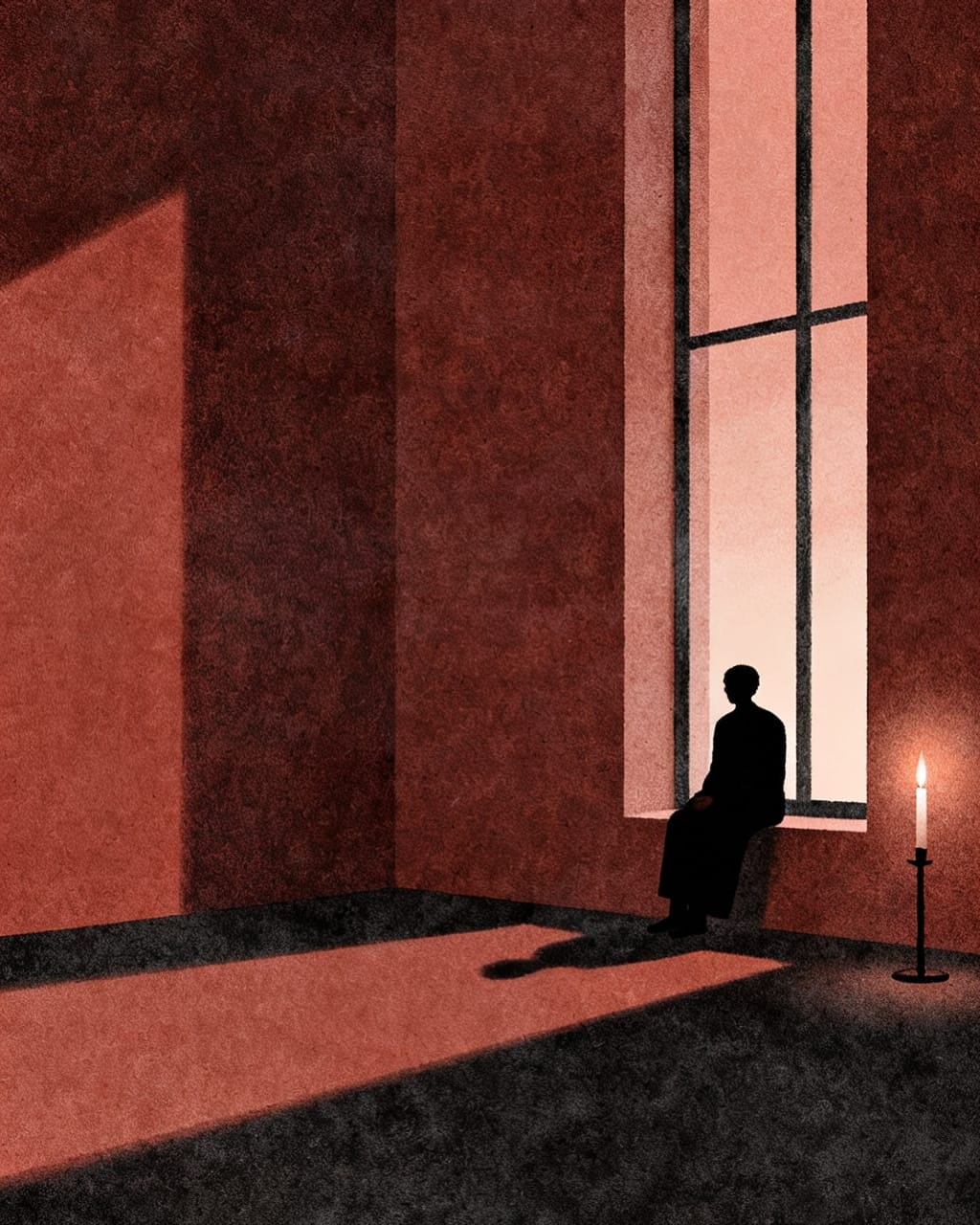
There is a particular silence that used to live in the gap between a question and its answer. You wondered who wrote a song, or whether a friend was right about something, or what the word was for that feeling, and then you sat with not knowing for a while. Sometimes the answer arrived on its own, hours later in the shower. Sometimes it never came and you forgot you had asked. That silence is gone now. The gap closes in under a second, whether or not you wanted it to.
I am not going to argue that this is a catastrophe. The tools are good. Looking things up is no vice. But you give something away in the transaction, and most of us never noticed we agreed to the terms. We are not losing knowledge. We are losing the interior, the part of a person that only forms when no input arrives.
what an interior life actually is
People talk about the inner life as if it were a mood, something soft and optional. It is closer to a kind of work. An interior life is what accumulates from thoughts you finished by yourself. It is the opinion you reached slowly, the link you drew between two unrelated things while you stared out a train window, the position you hold because you reasoned your way there and it cost you something, not because you read it.
You can tell a borrowed thought from an earned one. Borrowed thoughts are fluent and frictionless. You can recite them. Earned thoughts come out a little awkward and a little overprotected, because you remember the effort. They are yours in a way the others never will be.
The machine is very good at producing borrowed thoughts at scale. Ask it anything and it returns a clean, balanced, plausible paragraph. The danger is not that the paragraph is wrong. The danger is that it is good enough to stop you from writing your own. You read it, you nod, and the small private labor that would have built something in you never happens. Repeat that a few hundred times a week and you start to notice the cabinet is full and the workshop is empty.
A mind is not a container you fill. It is a muscle that atrophies in comfort.
boredom is a raw material
The first thing to defend is boredom, which we have nearly eradicated. The empty minute no longer exists. The line at the pharmacy, the elevator, the ninety seconds before a meeting, the walk to the corner: each of these used to be unstructured time, and unstructured time is where the mind wanders into places you did not send it.
A wandering mind is not waste. It is the brain's default mode doing maintenance, sorting the day, drawing links you could not draw on purpose. The good idea that arrives in the shower arrives there because the shower is one of the last places you cannot bring a screen. Protect a few more of those places and you protect the conditions under which you think.
So here is a practice, not a platitude. Pick one daily transit and make it dumb. The walk, the commute, the dishes. No earbuds, no podcast, no phone. Let it be boring. The first week it will feel like withdrawal, because it is. By the third week you will notice your mind producing things again, and you will recognize them as yours.
the unanswered question
The harder discipline is to leave a question open on purpose. When you wonder something now, the reflex to resolve it instantly feels almost physical, like reaching for a glass of water. But not every question wants an answer in a second. Some questions are better as companions. You carry them around, turn them over at odd hours, and they slowly recruit everything you meet into evidence.
Keep a question you refuse to look up. Choose one that matters to you and is not urgent. Why do you keep returning to a certain book. What is the actual reason you left that job. Whether the thing you call ambition is closer to fear. Sit with it for a week before you reach for any source. You are not being inefficient. You are letting your own mind have first attempt at the problem, which is the only way it stays in practice.
There is a related move for reading and watching. When you finish something, resist the urge to read what other people thought of it. Write down your own reaction first, even three sentences in a notebook. The internet's verdict is always available later. Your unmediated response is available only once, in the few minutes before someone else's framing overwrites it.
think on paper, not on a screen
A notebook is the cheapest and most underrated instrument for keeping a mind. Not for storage. For thinking. Handwriting is slow enough that you cannot outrun your own reasoning, and slow is the point. You catch the places where the argument is thin because your hand forces you to move through them at its own speed.
The rule that makes it work is simple. Write before you search. Draft the email, the paragraph, the plan, the half-formed opinion, in your own clumsy words, before you ask anything to help. Let the first version be bad and entirely yours. Then, if you want, bring in the tool to sharpen it. You keep authorship of the thinking and still get the polish. Reverse the order and the tool writes the thought while you supply the typing.
the company you keep when alone
Solitude is the last of it, and the most quietly endangered. We have confused being alone with being lonely, so we fill every solitary moment with voices, feeds, and someone else's day. But solitude is not loneliness. It is the room where you become a particular person rather than an average of everyone you follow.
You do not need a monastery. You need a regular appointment with no input: a coffee with no phone, an hour on a Sunday, a single walk. The test of whether you are actually keeping a mind is small and embarrassing. Can you sit with yourself for twenty minutes and not feel the pull to escape into a device. If you cannot, that is no moral failing. It is a measurement, and it tells you exactly how much practice you have lost and roughly how much you need to get it back.
None of this rejects the tools. I use them every day and I am better for it. The argument is narrower and, I think, more important. A machine can answer almost any question you bring it. It cannot do the one thing that makes a person interesting, which is to have wondered. Keep some of the wondering for yourself. Leave a few gaps unfilled. You do not find the interior life. It grows, slowly, in the spaces you decline to surrender.