An editor I once worked with could find the weak sentence in a thousand-word piece in about four seconds. Not read it, scan it. Her eye would stop on a line the way a hand stops on a splinter in a banister, before you have decided anything, and she would tap it with a pen and say, this one. She was right almost every time. When I asked how she did it she could rarely explain past the first layer. "It's trying too hard." "It's doing the work twice." Mostly she just knew, and the knowing arrived faster than the reason for it.
For years I filed this under talent, the way you file anything you cannot account for. I no longer think that is what it was. What she had was a database, built by hand over twenty years, of every sentence she had ever fixed. The four-second verdict was not a guess. It was a lookup against ten thousand prior judgments, compressed so far down that it surfaced as a feeling. We have a word for that compression. We call it taste, and we have spent most of the language's history treating it as the least serious thing a person can have.
the word we use for people who are wrong about themselves
Taste has an image problem, and the image is roughly: a man in an expensive scarf telling you the natural wine is corked. We use the word to mean preference dressed up as authority, the arbitrary opinions of people with time to have them. So when someone says taste is becoming a critical skill, the instinct is to roll your eyes. It sounds like a way for the comfortable to keep feeling superior after their actual skills stop being scarce.
But that is the decorative meaning, and it is not the one that matters now. The working definition is colder. Taste is the trained ability to look at several things that all seem fine and know which one is actually good, and to know why, fast enough for the answer to be useful. Nothing about it is soft. It is closer to a diagnostic instrument than to an opinion. A wine professional working a blind tasting is not enjoying herself; she runs a person through a forensic procedure that happens to end in a glass. The pleasure is incidental. The discrimination is what counts.
For most of history this instrument was a finishing tool. You did the hard part, you made the thing, and then taste came in at the end to choose between the few versions you had the time and money to produce. It sat on top of the real work, a thin layer of judgment over a thick base of labor. You could get away with weak taste because the labor was the bottleneck anyway. There were only ever three options on the table, and someone had bled to make each one.
what changes when the options are free
That arrangement assumed scarcity of output. Remove it and the whole shape inverts. When a machine will produce forty competent versions of the thing before you have finished describing it, the labor of making it stops being the constraint. The constraint becomes the choice. And the choice was exactly the part we never took seriously, because we never had to do much of it.
Taste is a compression of every judgment you ever made by hand, and you cannot download someone else's.
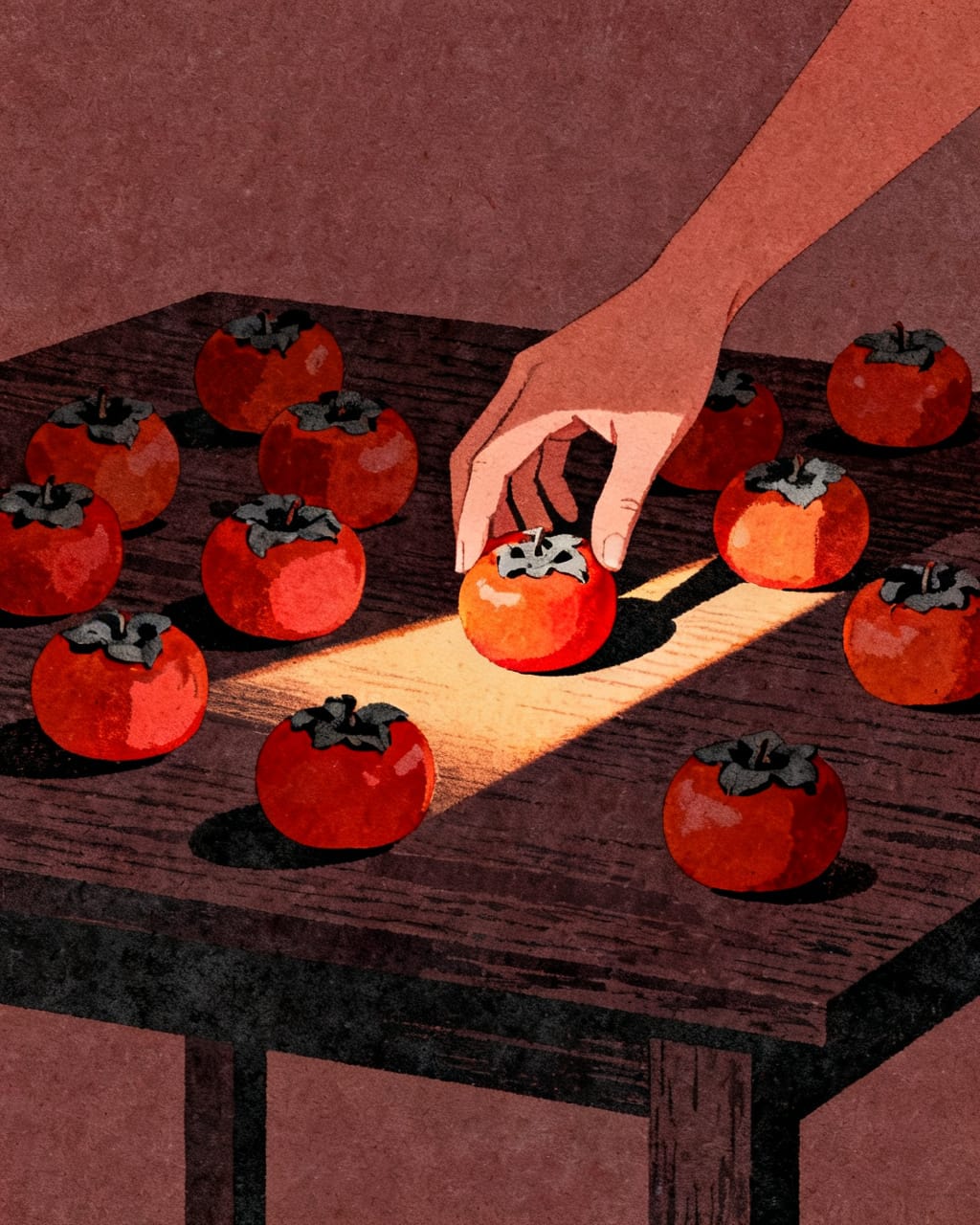
Here is the trap inside the abundance, and it is subtle. The forty versions are not bad. That would be easy. Bad is easy to reject. The forty versions are fine. They are plausible, clean, defensible, the kind of work that passes review and offends no one. The flood is not a flood of garbage. It is a flood of the adequate, and adequate is the hardest thing in the world to argue against if you do not already know what better would have looked like. You cannot reject the merely-fine option unless you can feel the gap between it and the good one, and feeling that gap is the whole content of taste. Someone without it does not see forty options and a problem. They see forty options and a solved problem. They ship the third one. It was fine.
So the skill that decides whether infinite output is worth anything is not the ability to generate it. It is the ability to stand in front of the generated pile and say, with reasons, no, not that, that one, and here is what is wrong with the other thirty-nine. That is not a polish you apply at the end anymore. It is the work.
you cannot install it
The uncomfortable thing about taste, the reason it cannot be outsourced even to a model trained on every good thing ever made, is how it gets built. It is built the slow way and there is no other way. It comes from three things, and a machine can shortcut none of them for you.
It comes from exposure, but a specific kind: enough contact with the genuinely good that your baseline quietly resets. You do not develop a palate by reading about wine. You develop it by drinking a great deal of it next to people who can name what you taste, until the vocabulary stops being words and becomes perception. The editor read for twenty years before she could tap a line in four seconds. The exposure has to be yours. You cannot inherit a reset baseline; you can only acquire one.
It comes from friction, from making the bad version yourself and being made to live with it. This is the part the tools quietly remove. You learn the most about what is wrong with a sentence by having written the wrong sentence and felt, in some wordless instrument you did not build on purpose, the small refusal that says no. Each refusal is a data point. Taste is the accumulation of those refusals into something that fires automatically. Skip the friction and you skip the accumulation. You get the output and keep none of the instrument.
And it comes from caring, the one nobody wants to put on a competency framework because it sounds like a feeling and feelings are unprofessional. But care does the discriminating work. You only learn to tell the good sentence from the fine one if it matters to you that the difference exists, if the fine one bothers you. Indifference is the real enemy of taste, more than ignorance. The model is the most indifferent thing ever built. It hits adequate and stops, by design, because adequate is the whole target. Adequate is a ceiling for it and a floor for a person who cares. That gap, between the machine's ceiling and the caring person's floor, is the only place left where value gets added.
the survival part
I called this a survival skill and meant it more plainly than it sounds. The economy filling up around us is one of infinite plausible output, and in that economy almost everyone can now produce the fine version of almost anything. What they cannot all do is tell. The fine work will be free and everywhere, and it will look the same as the good work to anyone who has not been trained to feel the difference. Which means the difference, and the people who can perceive it, become the scarce and valuable thing by simple arithmetic.
This is, if you let it be, the hopeful reading. The years you spent doing it the hard way, making the bad version and sitting with it, building an instrument you could never quite explain, were not made worthless by the machine. They are the only part it cannot reproduce, because it cannot do them for you and you cannot do them quickly. The taste you built by hand is now the rarest thing you own. Keep it sharp. Use it on the forty options. The making is finished as a source of advantage. The telling is just beginning.